
Read time: 3 minutes

Upper respiratory tract infections (URTIs) and otitis media remain among the most common causes of morbidity in children, often leading to missed school days, parental stress, and frequent antibiotic prescriptions. With rising concerns about antimicrobial resistance and microbiome disruption, there is growing interest in safe, evidence-based botanical interventions. Echinacea purpurea, long used in traditional medicine to support immune function, has been increasingly studied in pediatric populations. Emerging evidence suggests it may play a meaningful role in reducing infection burden and limiting unnecessary antibiotic use.
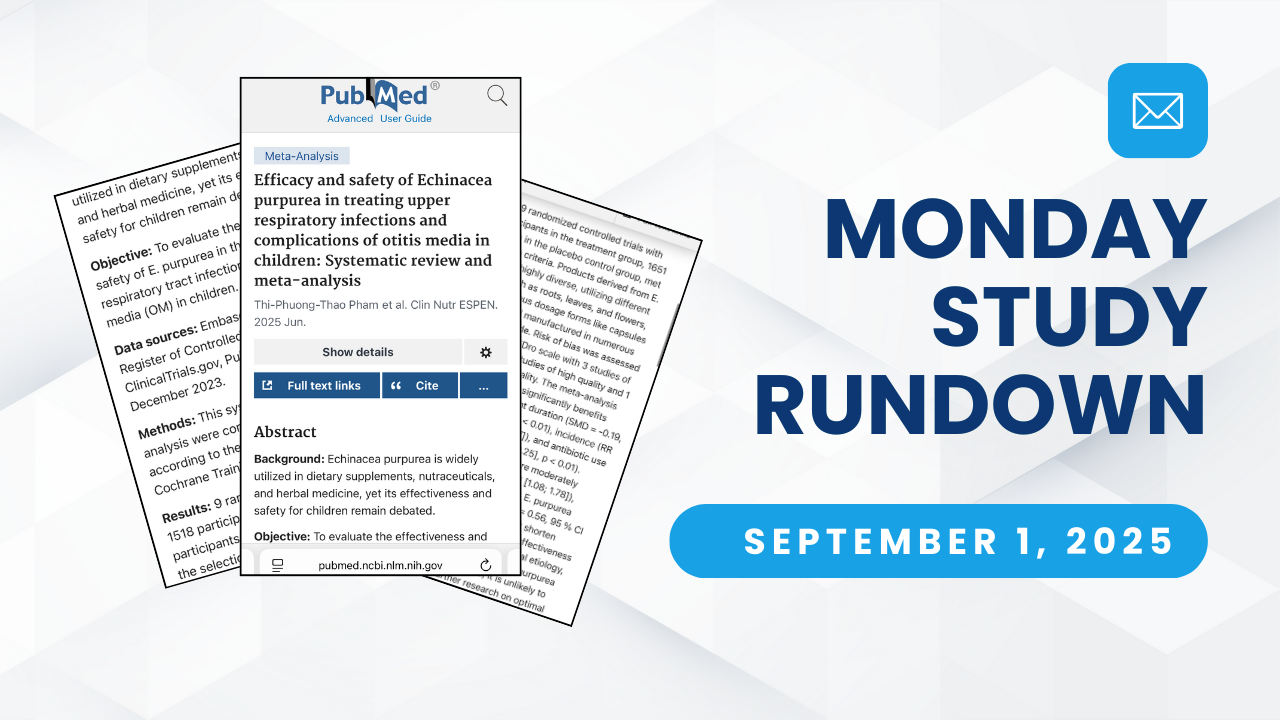
URTIs, including colds, influenza-like illnesses, and otitis media, are largely viral in origin but still account for a substantial portion of pediatric antibiotic prescribing. This pattern underscores the need for effective non-antibiotic interventions. Echinacea purpurea, a botanical with immunomodulatory and antiviral activity, has been investigated in multiple pediatric randomized controlled trials (RCTs). A 2025 systematic review and meta-analysis provides the most comprehensive synthesis to date, evaluating its efficacy in preventing and reducing the severity of respiratory infections in children.
A comprehensive review of nine randomized controlled trials (RCTs) evaluated how Echinacea purpurea performed in pediatric populations dealing with upper respiratory illnesses and ear infections. Here’s what emerged:
➣ Fewer Colds, Shorter Duration: Children taking E. purpurea had significantly fewer URTI episodes and recovered faster than those given placebo or no treatment.
➣ A Dramatic Drop in Antibiotic Use: Perhaps the most striking outcome? A substantial decrease in antibiotic prescriptions for children using Echinacea:
This has wide-reaching implications—not just for treating illness, but for protecting long-term microbiome and antibiotic stewardship.
➣ Fewer Ear Infections—But Not Shorter Ones: When it came to otitis media, the studies found that E. purpurea helped prevent new episodes:
Echinacea purpurea supports innate and adaptive immunity in several key ways:
In essence, it acts like a gentle immune primer—helping children respond more efficiently to pathogens without overstimulating their systems.
While generally well-tolerated, the review did find a modest increase in mild adverse events—such as rashes or gastrointestinal discomfort—in Echinacea groups. That said, no serious side effects were reported, and reactions were typically self-limited.
Still, product quality and formulation matter. Echinacea used in trials was typically standardized, often from the aerial parts of the plant, and in controlled doses. Not all over-the-counter options meet this standard—so guidance from a pediatric provider or integrative practitioner is essential.
Emerging evidence indicates that Echinacea purpurea can meaningfully reduce the incidence of pediatric respiratory infections and support more judicious use of antibiotics. While not curative and not a replacement for appropriate medical management, it represents a safe and well-studied adjunct that may strengthen preventive strategies.
Ongoing research will help clarify optimal dosing, formulations, and clinical applications. In the meantime, incorporating standardized Echinacea preparations under clinician guidance may provide families with an evidence-based, botanical option for reducing illness burden and supporting immune resilience.
Want pediatric-focused insights that cut through the noise? Subscribe to my Monday Study Rundown, where I unpack new research and what it means for real-world care.
For more Monday Study Rundowns, click here.