
Read time: 2 minutes

Social media has quickly become one of the most powerful influences on how young people communicate, form identity, and relate to the world around them. For many adolescents, it is not just a pastime—it is the main stage for social life. It is where friendships are built and tested, where self-image is shaped, and where connection and comparison exist side by side. Platforms like Instagram, TikTok, Snapchat, and X are not simply entertainment; they are ecosystems where teens perform, observe, compete, and find belonging.
Emerging evidence suggests that how young people engage may matter far more than how long they are online. Let’s take a look at the recent study.
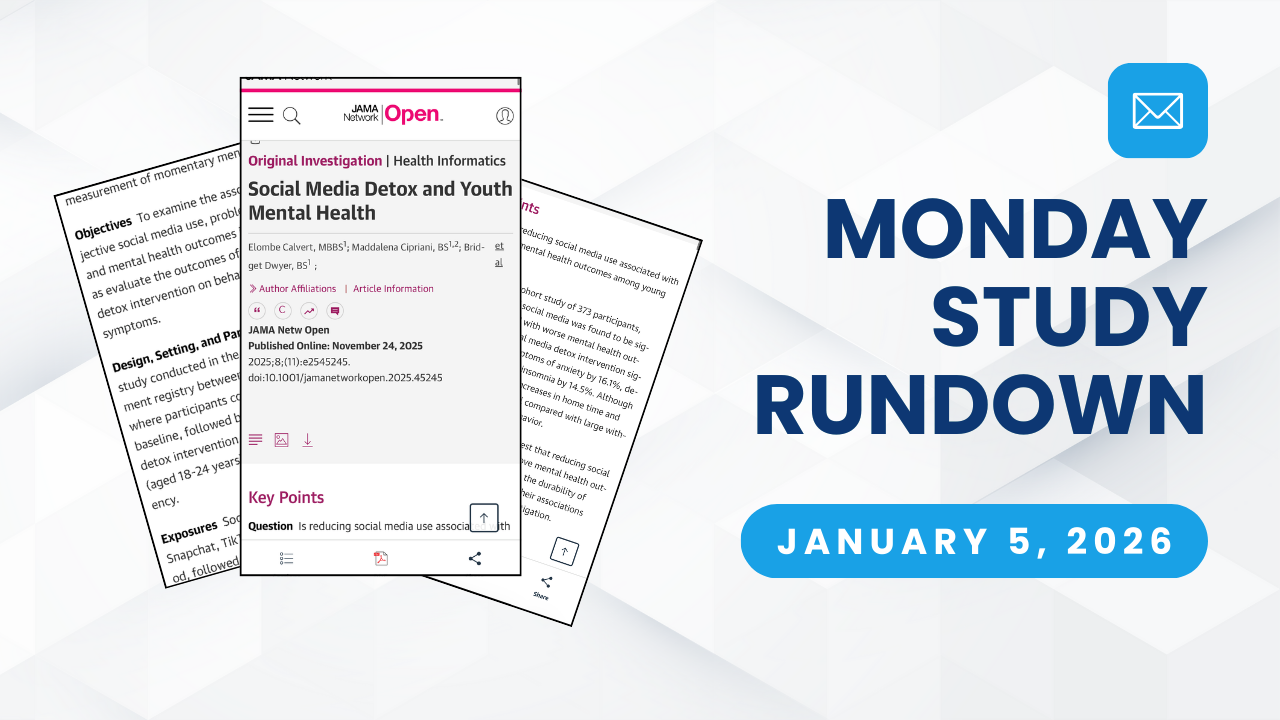
A recent study published in JAMA Network Open brings valuable insight to this ongoing conversation. Researchers followed 373 young adults between the ages of 18 and 24 through a two-week baseline period and then a one-week voluntary social media detox, asking participants to step away from platforms like Instagram, TikTok, Snapchat, and others.
What made this study particularly noteworthy was its combination of validated psychological tools—such as the PHQ-9, GAD-7, ISI, and UCLA Loneliness Scale—with real-time smartphone data and ecological momentary assessments, which allowed for a more nuanced understanding of both behavior and emotional outcomes.
Participants who completed the detox experienced statistically significant improvements in depression, anxiety, and insomnia symptoms. While loneliness scores remained unchanged, the broader findings underscored a meaningful trend: it wasn’t total screen time that predicted psychological distress, but rather the quality of engagement. Specifically, subjective patterns like compulsive checking, emotional reliance on apps, and negative social comparison had a much stronger correlation with poor mental health outcomes than time-based metrics alone.
Even a one-week pause can create space for emotional recalibration. And for patients who may not be ready to step away from social media entirely, a conversation about boundaries, mindful use, and self-awareness is a good place to start.
Want pediatric-focused insights that cut through the noise? Subscribe to my Monday Study Rundown, where I unpack new research and what it means for real-world care.
For more Monday Study Rundowns, click here.