
Read time: 5 minutes

As integrative pediatric clinicians, we’ve long understood that medications don’t act in a vacuum. Every compound we introduce into the body—whether prescribed, over-the-counter, or natural—interacts not only with human physiology, but with the trillions of microbes that call the gut home. For years, our conversations around antimicrobial resistance have understandably focused on antibiotics themselves: overuse, inappropriate prescribing, agricultural contamination. But a new line of research is shifting that narrative in a surprising direction.
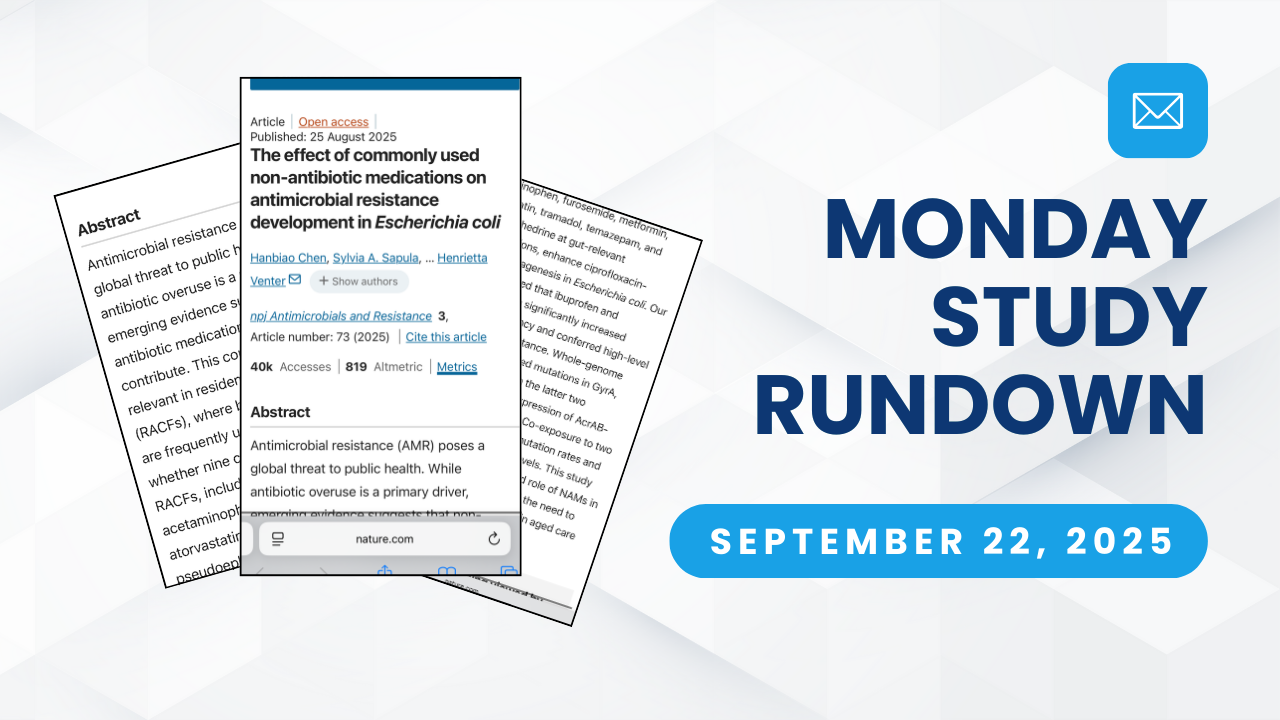
A recent study published in Nature Mental Health (2025) brings fresh insight—and a layer of urgency—to how we think about non-antibiotic medications (NAMs) and their potential role in shaping antibiotic resistance in the microbiome. The implications for our pediatric population are significant, especially as polypharmacy becomes increasingly common in both conventional and integrative contexts.
The researchers examined how nine commonly prescribed NAMs interacted with Escherichia coli when co-administered with ciprofloxacin—a widely used fluoroquinolone antibiotic. The drugs tested included familiar names: ibuprofen, acetaminophen, diclofenac, metformin, furosemide, tramadol, temazepam, atorvastatin, and pseudoephedrine. Importantly, these were assessed at concentrations relevant to what actually reaches the gut lumen during treatment—real-world conditions, not just petri dish abstractions.
Their findings were sobering.
Certain NAMs—particularly ibuprofen and acetaminophen—significantly increased the mutation frequency of E. coli exposed to ciprofloxacin. That means these common, over-the-counter medications weren’t just bystanders—they were actively contributing to the evolution of antibiotic resistance when combined with antibiotics.
Even more concerning, some of the resistant strains that emerged showed cross-resistance to other antibiotic classes beyond ciprofloxacin, including β-lactams. Mechanistically, this was linked to overexpression of efflux pumps like AcrAB-TolC, triggered by mutations in regulatory genes such as marR and acrR. These pumps don’t just protect against one drug—they make bacteria broadly harder to kill.
When two NAMs were used together—say, ibuprofen plus acetaminophen—the effects were even more pronounced. Higher mutation rates. More resistant strains. Stronger efflux activity. The drug interactions weren’t merely additive; they were synergistic in a problematic direction.
The study was conducted in the context of aged care, where polypharmacy is a known challenge. But we would be mistaken to think this issue doesn’t translate to children.
In fact, pediatric patients—particularly those with chronic inflammatory, neuroimmune, or allergic conditions—are increasingly on multiple medications, sometimes for long durations. A child with post-viral inflammation might be on an antibiotic, ibuprofen, an antihistamine, and melatonin, all within a 72-hour window. From the microbial perspective, that’s a pharmacologic storm.
Even medications typically considered benign or necessary—acetaminophen during fever, ibuprofen post-tonsillectomy, pseudoephedrine during sinus congestion—can be part of a complex web of interactions we haven’t fully appreciated. And unlike adults, pediatric microbiomes are still developing. These formative years are when microbial ecosystems are most sensitive to disruption—and where resistance genes, once established, can persist and spread.
This research reinforces something we’ve always known intuitively but now have molecular backing for: non-antibiotic medications can be microbiome-active agents. They influence not just flora composition, but bacterial behavior—mutation rates, resistance acquisition, efflux pump expression.
As clinicians, this invites several layers of reflection:
1. Re-examining Co-Prescribing Patterns: Are we too casual about pairing NAMs with antibiotics in acute care? Could routine combinations (e.g., amoxicillin + acetaminophen) be increasing resistance risk in ways we’ve never tracked?
2. Polypharmacy in Complex Care: Many of our patients with neurodevelopmental, autoimmune, or GI conditions are already on 3–5+ medications—some prescribed, some over-the-counter. We must ask: Are we fully accounting for the pharmaco-ecologic load on the gut microbiome when adding in an antibiotic?
3. OTC Use at Home: Parents often administer over-the-counter medications liberally during acute illness. Do we need to include OTC education as part of our antibiotic stewardship efforts?
4. Implications for Microbiome Repair: If NAMs are contributing to resistance pressure, our post-antibiotic protocols must go beyond probiotics and gut support. We may need to consider timing and temporary withdrawal of certain NAMs during microbiome recovery phases.
This study doesn’t tell us to abandon all non-antibiotics. But it does invite us to think more ecologically—to see medications not as isolated interventions, but as agents that enter and interact with the living microbial ecosystem of the gut.
As integrative providers, we’re already primed for this. We already work hard to avoid unnecessary antibiotic and pain medication use. We’ve long understood that a drug isn’t “just a drug”—it’s a signal, a stressor, a modulator. This study gives us another lens to apply that thinking, especially during antibiotic decision-making.
It also strengthens the argument for:
In pediatrics, where microbiomes are malleable, medication exposure is cumulative, and resistance development can shape an entire lifetime, this awareness becomes even more critical.
Want pediatric-focused insights that cut through the noise? Subscribe to my Monday Study Rundown, where I unpack new research and what it means for real-world care.
For more Monday Study Rundowns, click here.