
Evidence

Monday Study Rundown cover
Erika Krumbeck, ND, FABNP

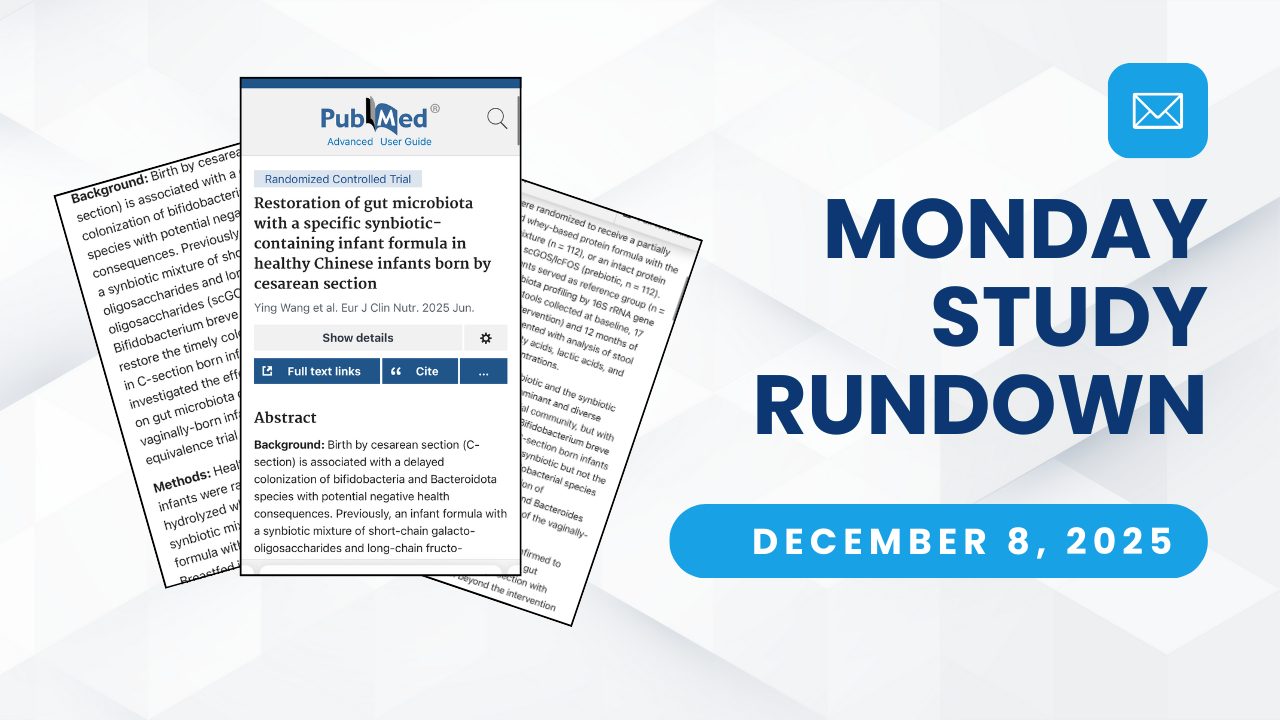
Synbiotic Support for C-Section Infant Microbiota

Read time: 4 minutes Cesarean delivery changes the way infants are colonized in early life, often delaying the arrival of key anaerobes that help train the immune system, mature the intestinal barrier, and support metabolic balance. New evidence suggests that a specific synbiotic formula—pairing prebiotics with Bifidobacterium breve M-16V—may help “close the gap” for fully formula-fed C-section infants by nudging the gut ecosystem toward a more physiologic pattern. A 2025 randomized controlled trial (PMID: 39915586) gives us a closer look at how this microbiome-informed approach can narrow the early biologic difference between cesarean- and vaginally-born infants. Here’s what pediatric integrative clinicians should know. The early-life microbiome & the cesarean gap Birth mode is one of the earliest and strongest influences on infant gut colonization. Vaginal

Read More
Monday Study Rundown cover
Erika Krumbeck, ND, FABNP

Postbiotics in pediatric caries: safer than probiotics?

Read time: 4 minutes Pediatric dental caries is more than an enamel issue—it affects nutrition, immune resilience, and confidence in early childhood. While we’ve long emphasized fluoride, hygiene, and diet, emerging data suggests that postbiotics—non-living bacterial derivatives—may help modulate oral pathogens like Streptococcus mutans at the molecular level. A new systematic review (PMC11894266) reveals how this targeted, microbiome-informed approach may become a valuable adjunct in pediatric caries prevention. Here’s what the science shows—and how we might begin to use it. The oral microbiome and a new frontier in caries prevention Caries continues to be the most prevalent chronic disease in children, with ripple effects into nutrition, sleep, behavior, and systemic inflammation. For those of us working with complex pediatric cases, the question isn’t whether hygiene

Read More
Monday Study Rundown cover
Erika Krumbeck, ND, FABNP

Probiotic Precision: Targeted Strains Reduce Fever Duration in Pediatric URTIs

Read time: 3 minutes Upper respiratory tract infections (URTIs) are among the most common reasons children see a doctor—and for many families, fever is the most distressing symptom. While integrative care offers tools for supporting immune resilience, new research suggests that specific probiotic strains may also help reduce the burden of acute illness. A recent randomized controlled trial identifies a promising trio of microbes that significantly shortened fever duration in young children. Probiotics and Pediatric Fever: What a New RCT Tells Us About Immune Modulation Fever is a hallmark of the body’s immune response to infection—but prolonged fever, especially in infants and toddlers, can drive parental anxiety, disrupt sleep, and increase antipyretic use. While probiotics are well-known for their gut and immune benefits, most clinical

Read More
Monday Study Rundown cover
Erika Krumbeck, ND, FABNP

Vitamin D3 and Neurobehavioral Modulation in Children: Insights from Tic Disorders Research

Read time: 4 minutes Within pediatric integrative medicine, micronutrient status is increasingly recognized as a determinant of neurodevelopmental stability. Nutrients such as iron, zinc, magnesium, and essential fatty acids are foundational for neurotransmitter synthesis and synaptic modulation. Vitamin D, traditionally viewed through the lens of bone and immune health, has emerged as a critical neurosteroid with widespread effects on brain development, dopaminergic regulation, and neuroinflammation. Despite mounting evidence linking vitamin D insufficiency with neurodevelopmental and mood disorders, its therapeutic role in childhood neurobehavioral syndromes remains underexplored. A recent randomized controlled trial published in 2024 provides important insight into this gap, examining the effect of vitamin D₃ supplementation on tic severity in children—a study with broader implications for conditions such as ADHD, where dopaminergic and inflammatory pathways overlap. Study

Read More
Monday Study Rundown
Erika Krumbeck, ND, FABNP

Oral Nutritional Supplements in Underweight Picky Eaters

Read time: 4 minutes Few clinical presentations demand more nuanced intervention than the underweight child with selective eating. These are not simply “picky eaters.” Many exhibit entrenched feeding difficulties—sensory sensitivities, food rigidity, gut dysfunction, or features of avoidant/restrictive food intake disorder (ARFID). These children often fail to meet energy requirements through food alone, despite dietetic support and family-centered strategies. As practitioners, we face a delicate question: when does a therapeutic diet need to be supplemented, and is there evidence to support that approach? Study Overview A newly published systematic review and meta-analysis in Clinical Nutrition ESPEN (2025) adds important clarity to this discussion. The authors evaluated five randomized controlled trials involving 874 children who were underweight and had feeding difficulties. In all studies, participants received

Read More
Monday Study Rundown cover
Erika Krumbeck, ND, FABNP

The Long Reach of Maternal Nutrition: Mediterranean Diet and Pediatric Immune Health

Read time: 4 minutes Maternal nutrition has long been understood as central to fetal growth and pregnancy outcomes. Increasingly, however, it is recognized as a determinant of long-term pediatric health. The intrauterine environment—shaped by maternal diet, lifestyle, and metabolic status—acts as an early regulator of immune system development, metabolic programming, and microbial tolerance. Traditionally, prenatal nutrition counseling has emphasized folate supplementation, caloric sufficiency, gestational weight gain, and glycemic control. While these remain critical, emerging evidence suggests the scope should be broader: maternal diet quality may directly influence a child’s risk for immune-mediated conditions years after birth. A recent publication in Nutrients (2025) provides compelling evidence for this expanded framework, demonstrating that adherence to a Mediterranean dietary pattern during pregnancy is associated with significantly reduced risk

Read More
Erika Krumbeck, ND, FABNP

Prenatal Acetaminophen Use and Neurodevelopmental Disorders: What Does the Evidence Say?

Read time: 5 minutes ✉️ A note from Dr. Krumbeck, Politics aside, as clinicians it is our responsibility to critically evaluate the literature so we can make the best recommendations to our patients.  Unfortunately, when politics and science become intertwined the evidence can be distorted or misrepresented, leaving patients and consumers confused about what to trust and unsure how to make the best decisions for their health. I strongly encourage providers to review the evidence in this article and counsel their patients accordingly. The evidence speaks for itself! 👇🏻 Acetaminophen (paracetamol) is one of the most widely used over-the-counter medications during pregnancy, considered by many to be the “safest” option for managing pain and fever in expectant mothers. Yet emerging research suggests we may need to revisit

Read More
Monday Study Rundown cover
Erika Krumbeck, ND, FABNP

The Unseen Influence of Non-Antibiotics on Antimicrobial Resistance

Read time: 5 minutes As integrative pediatric clinicians, we’ve long understood that medications don’t act in a vacuum. Every compound we introduce into the body—whether prescribed, over-the-counter, or natural—interacts not only with human physiology, but with the trillions of microbes that call the gut home. For years, our conversations around antimicrobial resistance have understandably focused on antibiotics themselves: overuse, inappropriate prescribing, agricultural contamination. But a new line of research is shifting that narrative in a surprising direction. A recent study published in Nature Mental Health (2025) brings fresh insight—and a layer of urgency—to how we think about non-antibiotic medications (NAMs) and their potential role in shaping antibiotic resistance in the microbiome. The implications for our pediatric population are significant, especially as polypharmacy becomes increasingly common

Read More
Erika Krumbeck, ND, FABNP

Probiotic Support for Antibiotic-Associated Diarrhea in Pediatrics: New Evidence for Saccharomyces boulardii

Read time: 3 minutes Antibiotic-associated diarrhea (AAD) remains a frequent and frustrating complication in pediatric primary care. While most cases are self-limiting, AAD can increase caregiver distress, interrupt treatment adherence, and occasionally lead to more serious sequelae such as dehydration or Clostridioides difficile infection. Probiotic interventions are a common integrative strategy, yet clarity is still needed around strain specificity, dosing, and clinical effectiveness—particularly in very young children. A recent retrospective multicenter study published in Frontiers in Pediatrics (PMCID: PMC12234335) offers new insight into this topic, comparing the efficacy of Saccharomyces boulardii, Bifidobacterium, and standard yogurt in preventing AAD in children under 3 years of age. Study Design at a Glance This was a real-world, multicenter, retrospective cohort study conducted across 10 hospitals in China. The

Read More
Monday Study Rundown cover
Erika Krumbeck, ND, FABNP

Echinacea’s Role in Preventing Respiratory Infections in Children

Read time: 3 minutes Upper respiratory tract infections (URTIs) and otitis media remain among the most common causes of morbidity in children, often leading to missed school days, parental stress, and frequent antibiotic prescriptions. With rising concerns about antimicrobial resistance and microbiome disruption, there is growing interest in safe, evidence-based botanical interventions. Echinacea purpurea, long used in traditional medicine to support immune function, has been increasingly studied in pediatric populations. Emerging evidence suggests it may play a meaningful role in reducing infection burden and limiting unnecessary antibiotic use. Echinacea and Pediatric Immune Support: What the Evidence Now Shows URTIs, including colds, influenza-like illnesses, and otitis media, are largely viral in origin but still account for a substantial portion of pediatric antibiotic prescribing. This pattern underscores

Read More
Monday Study Rundown cover
Erika Krumbeck, ND, FABNP

Combining Herbal and Western Medicine for Pertussis-Like Syndrome in Children

Read time: 2 minutes Persistent, spastic cough in pertussis-like syndrome (PLS) can be distressing for children and frustrating to manage in clinical practice. While macrolide antibiotics address underlying pathogens, they often fall short in alleviating symptoms. A new systematic review and meta-analysis examines whether integrating traditional herbal medicine (HM) with standard Western medicine (WM) can improve outcomes in pediatric PLS. Why Look Beyond Antibiotics? PLS presents similarly to pertussis but without confirmed Bordetella pertussis infection. In children, the prolonged cough disrupts sleep, feeding, and family routines. While macrolides like erythromycin or azithromycin are standard, they rarely shorten the paroxysmal phase or provide meaningful symptom relief. Traditional herbal medicine has been used for centuries in East Asia for respiratory illnesses. This review explored whether combining HM

Read More
Monday Study Rundown cover
Erika Krumbeck, ND, FABNP

Are Gut Microbiome-Based Interventions Enough for Pediatric Obesity?

Read time: 3 minutes Childhood obesity is a complex condition shaped by far more than calorie intake. Inflammation, metabolic signaling, and the gut microbiome all play a role—and targeting the gut ecosystem has become a growing area of research. A new systematic review explores whether microbiome-based therapies can shift outcomes for pediatric obesity. Here’s what the evidence tells us—and what it doesn’t. Grounding the Question: Can the Microbiome Help Address Pediatric Obesity? There’s no doubt the gut microbiome is integral to metabolic health. In children and adolescents, obesity is frequently associated with gut dysbiosis—lower microbial diversity, reduced short-chain fatty acid (SCFA) production, and an overgrowth of pro-inflammatory taxa. Since the microbiome continues to mature into early adulthood, interventions during childhood may hold potential for long-term

Read More
Monday Study Rundown cover
Erika Krumbeck, ND, FABNP

New Study: Growing Pains as a Possible Early Migraine Symptom

Read time: 3 minutes Many children experience recurring leg pain labeled as “growing pains,” often dismissed as benign and self-limiting. But new prospective data suggest that in children with a family history of migraine, these pains may be an early warning sign. Could growing pains be the first symptom in a larger neurovascular picture? Let’s explore the research and clinical implications. Growing Pains or Early Migraine? Growing pains affect up to half of all children at some point in early development. These vague, deep aches in the legs—typically at night—are often considered harmless and attributed to musculoskeletal growth. But recent research challenges this view, especially in children with a family history of migraine. A 2023 prospective study published in Cephalalgia Reports followed 100 children born

Read More
Monday Study Rundown cover
Erika Krumbeck, ND, FABNP

Parental Cannabis Use and Child Well‑Being: Insights from a JAMA Pediatrics Study

Read time: 2 minutes Cannabis legalization is reshaping parental behaviors—but how does this impact children? A recent JAMA Pediatrics study explores the link between parental cannabis use, parenting quality, and young children’s emotional and behavioral health. Here’s the evidence integrative providers need to guide families. Parental Cannabis Use: When the Conversation Includes the Kids While discussions around cannabis often concentrate on adult treatment or prenatal effects, a growing question is: how might parental cannabis use outside of pregnancy affect parenting and child health? A 2025 JAMA Pediatrics study used surveys across primary care clinics in multiple states to investigate the association between parental cannabis use, negative parenting practices, and preschool-aged children’s emotional and behavioral outcomes. What the Study Found ➣ Prevalence of Use: Among 266

Read More
Monday Study Rundown cover
Erika Krumbeck, ND, FABNP

The Subtle Impact of Parental Tech Use on Early Childhood Development

Read time: 3 minutes Emerging research links parental technology use around young children with subtle but meaningful developmental outcomes. For integrative pediatric providers, this highlights an important conversation point in family-centered care: supporting mindful tech habits as part of holistic child health. Digital Distraction and Development: An Overlooked Family Health Factor Integrative pediatric care looks beyond physical symptoms—it considers family dynamics, mental health, and environmental influences on child development. A growing body of evidence suggests one such influence deserves more clinical attention: parental technology use around young children. A recent systematic review in JAMA Pediatrics synthesized findings from 21 studies involving nearly 15,000 children under 5. The focus? How often parents used digital devices in the presence of their children—and what that meant for child

Read More
Monday Study Rundown cover
Erika Krumbeck, ND, FABNP

Is Gut Bacteria Fueling Pediatric Obesity? A New Look at SIBO and Metabolic Risk

Read time: 3 minutes As pediatric obesity rises, researchers are looking beyond calories and activity to understand the biological underpinnings. One surprising player? Small intestinal bacterial overgrowth (SIBO). A new systematic review uncovers how imbalances in the gut microbiome might drive inflammation, insulin resistance, and liver disease in children with obesity. Gut Bacteria and Childhood Obesity: The SIBO Connection While the childhood obesity epidemic is often framed around diet and exercise, science is zooming in on a lesser-known culprit: the bacteria living in our intestines. More specifically, SIBO—small intestinal bacterial overgrowth—is emerging as a possible trigger for metabolic dysfunction in kids with obesity. In a 2025 systematic review published in Nutrients, researchers explored the link between SIBO and pediatric obesity. Their findings paint a compelling

Read More
Monday Study Rundown cover
Erika Krumbeck, ND, FABNP

Choline as a Neurodevelopmental Ally for Children Prenatally Exposed to Alcohol

Read time: 3 minutes Fetal Alcohol Spectrum Disorders (FASD) remain a leading cause of preventable developmental disabilities worldwide. While early intervention is critical, promising research now points to a powerful nutritional support: choline. Could this essential nutrient help repair memory deficits caused by prenatal alcohol exposure? Let’s dig into the emerging science. Choline and Early Brain Development: A New Therapeutic Avenue for FASD Prenatal alcohol exposure can disrupt brain development, leading to long-term challenges in learning, memory, and behavior. For children diagnosed with FASD, interventions that can strengthen cognitive function—especially memory—are urgently needed. That’s where choline, an essential nutrient involved in brain growth and neurotransmitter synthesis, enters the picture. Often grouped with B-vitamins, choline supports the formation of cell membranes and is a precursor to

Read More
Monday Study Rundown cover
Erika Krumbeck, ND, FABNP

A Natural Alternative for Pediatric Constipation: The Promise of Ziziphus Jujube Syrup

Read time: 2 minutes Pediatric functional constipation is a common, frustrating condition that often recurs despite treatment. But new research points to an unexpected botanical contender: Ziziphus jujube syrup. Could this natural remedy offer a safer, more tolerable alternative to conventional laxatives? Let’s look at the data behind this emerging therapeutic option. Ziziphus Syrup vs. PEG: Rethinking First-Line Management in Pediatric Constipation Constipation in children is not only widespread, affecting up to 30% of the pediatric population, but it also significantly impacts quality of life—leading to pain, encopresis, behavioral changes, and school absences. While polyethylene glycol (PEG) remains a staple in conventional treatment, many parents report challenges with taste, adherence, and side effects. A 2025 randomized, double-blind clinical trial published in Scientific Reports introduces a

Read More
Monday Study Rundown cover
Erika Krumbeck, ND, FABNP

Psyllium Husk for Pediatric IBS: A Natural Fiber with Clinical Impact?

Read time: 3 minutes Irritable Bowel Syndrome (IBS) can disrupt more than just digestion—it affects a child’s sleep, school focus, and emotional resilience. Could a gentle, natural fiber offer real relief? A new randomized controlled trial explores how psyllium husk—a soluble fiber found in plants—significantly reduces IBS symptoms in children. Here’s what the latest research reveals and why this low-risk intervention might deserve a place in your toolbox. The Gut-Fiber Connection in Pediatric IBS IBS affects up to 10% of children, presenting with unpredictable bouts of abdominal pain, constipation, diarrhea, or both. While we often focus on diet triggers, stress, or gut microbiota, fiber—specifically soluble fiber—may hold more therapeutic promise than we realize. Psyllium, a plant-based soluble fiber, forms a gel-like substance in the gut.

Read More
Monday Study Rundown cover
Erika Krumbeck, ND, FABNP

Colloidal Oat in Pediatric Dermatology

Read time: 3 minutes Atopic dermatitis is more than dry skin—it’s often the first step in a child’s allergic march. But what if an everyday emollient could make a meaningful difference? A recent review explores the impact of colloidal oat in preventing and managing atopic dermatitis (AD) in infants. Here’s what the evidence says—and what it means for functional pediatric care. Why Skin Barrier Support Matters—Especially in Infants Atopic dermatitis is a chronic inflammatory skin condition rooted in skin barrier dysfunction and immune dysregulation. It affects up to 20% of children and often appears within the first six months of life. For high-risk infants, it’s not just a matter of discomfort—AD is a gateway to food allergies, asthma, and lifelong immune challenges. Infant skin is

Read More
Monday Study Rundown cover
Erika Krumbeck, ND, FABNP

Aromatherapy’s Role in Reducing Anxiety in Children

Read time: 3 minutes Anxiety before medical procedures is a real and often overlooked struggle for children. But what if a simple, natural approach could help? A new study explores the impact of lavender oil aromatherapy on pre-endoscopy anxiety in kids. Let’s dive into the findings and what they mean for pediatric care. The Soothing Potential of Lavender Medical procedures like endoscopy can be deeply stressful for children, especially when they don’t fully understand what’s happening. While anxiety management is typically addressed with medications or behavioral techniques, lavender oil aromatherapy is emerging as a promising, non-invasive solution. A recent randomized controlled trial set out to investigate this potential. Conducted in a tertiary hospital setting, the study involved 66 children aged 9 to 12 who were

Read More
Monday Study Rundown cover
Erika Krumbeck, ND, FABNP

Can Audiovisual Distraction Change the Pediatric Dental Experience?

Read time: 3 minutes Turning the Screen into a Soothing Tool: Can AVD Tame Dental Anxiety? For many kids, the dental chair feels like a battlefield—one where the sounds of drills, the smells of antiseptic, and the fear of the unknown trigger tears and tantrums. Dental anxiety doesn’t just affect the child—it strains the family, delays care, and can lead to costly dental problems down the road. In a new study published in Clinical and Experimental Dental Research, researchers explored whether a simple intervention—letting kids watch a movie during dental treatment—could help turn that battle into a smoother experience. Key Findings from the Study Why This Matters 🌱Beyond Pain: Shaping the Dental Experience: This study reminds us that pain isn’t the only factor shaping a

Read More
Monday Study Rundown cover
Erika Krumbeck, ND, FABNP

Vitamin D and Sleep in Kids with ADHD: A Missing Piece of the Puzzle?

Read time: 3 minutes Vitamin D plays a vital role in brain development and immune health—but could it also influence how well a child with ADHD sleeps? A new study explores the connection between vitamin D insufficiency and sleep disturbances in children with ADHD, offering insights that could reshape how we support kids with complex neurodevelopmental needs. Here’s what the latest research tells us. The Link Between Vitamin D and Sleep in ADHD Attention-deficit/hyperactivity disorder (ADHD) affects over 5% of children worldwide and is frequently accompanied by sleep disturbances, which can intensify behavioral challenges. Meanwhile, vitamin D—a neuroactive steroid—has increasingly been recognized not just for bone health, but for its impact on dopamine regulation, inflammation, and sleep quality. A recent case-control study published in Frontiers

Read More
Monday Study Rundown cover
Erika Krumbeck, ND, FABNP

The Neuroprotective Potential of Omega-3s in Brain Injury

Read time: 3 minutes Traumatic brain injury (TBI) affects millions globally, with limited effective treatments. But new research points to a surprising ally in recovery: omega-3 fatty acids. Could these essential fats help protect and heal the brain? Let’s explore the science behind this emerging neuroprotective strategy. Omega-3s and Brain Injury: A New Frontier in Neuroscience Traumatic brain injury—whether from a fall, car accident, or sports injury—remains one of the most complex challenges in medicine. While rehabilitation and symptom management have come a long way, effective neuroprotective treatments are still lacking. Enter omega-3 polyunsaturated fatty acids (O3 PUFAs), particularly DHA (docosahexaenoic acid) and EPA (eicosapentaenoic acid). Long celebrated for their cardiovascular and anti-inflammatory benefits, these fatty acids are now under the microscope for their potential

Read More
Monday Study Rundown cover
Erika Krumbeck, ND, FABNP

Is Early Screen Time Linked to Autism Later in Childhood?

Read time: 4 minutes With screens now part of everyday life, even for infants, many parents and providers wonder: does screen time during early development pose long-term risks? A new study published in JAMA Pediatrics sheds light on the connection between early screen exposure and the risk of autism at age 12. Screen Time and Neurodevelopment: A Closer Look at Early Risks From soothing babies with YouTube videos to toddlers tapping through tablet games, screen exposure is happening earlier than ever. While technology offers convenience and entertainment, researchers continue to explore how this early exposure might impact long-term developmental outcomes. One such concern is autism spectrum disorder (ASD), a condition characterized by challenges in social interaction, communication, and behavior. A recent longitudinal study investigated whether

Read More
Monday Study Rundown cover
Erika Krumbeck, ND, FABNP

Omega-3s and Eczema in Kids: A Nutritional Approach to Calming Inflammation?

Read time: 3 minutes Could a daily dose of fish oil help soothe childhood eczema? A new randomized clinical trial suggests that omega-3 fatty acids—alongside gamma-linolenic acid (GLA) and vitamin D—may significantly reduce atopic dermatitis symptoms in young children. Let’s unpack the findings and what they mean for managing eczema with nutrition. Understanding Atopic Dermatitis and the Inflammation Connection Atopic dermatitis (AD), often called eczema, is one of the most common chronic inflammatory skin conditions in children. It’s marked by dry, itchy, inflamed skin—and for many families, it’s a persistent, disruptive part of daily life. While the causes are multifactorial, inflammation plays a central role. Researchers have long explored ways to reduce inflammation from the inside out. Omega-3 fatty acids, found in fish oil, are

Read More
Monday Study Rundown cover
Erika Krumbeck, ND, FABNP

Magnesium & the Mind: Uncovering the Link Between Magnesium Deficiency and Autism

Read time: 3 minutes Magnesium plays a critical role in brain function, yet it’s often overlooked in conversations around neurodevelopment. A recent study shines light on a potential connection between low serum magnesium levels and autism spectrum disorder (ASD). What does the science say—and what might it mean for the future of autism research and care? Magnesium’s Role in Brain Health Magnesium is more than just a mineral; it’s a biochemical multitasker involved in over 300 enzymatic reactions, many of which support neurological development, synaptic function, and immune regulation. Despite its importance, magnesium deficiency remains surprisingly common in both children and adults. Now, new research is suggesting that this “silent shortfall” may have deeper implications—especially for children with autism spectrum disorder. A peer-reviewed study published

Read More
Monday Study Rundown cover
Erika Krumbeck, ND, FABNP

Zinc and the Brain: A Nutritional Key to Inflammation and Autism Risk?

Read time: 3 minutes Astrocytes—once considered mere support cells in the brain—are now emerging as major players in neurodevelopment and inflammation. A new study uncovers how zinc, an essential trace mineral, helps regulate astrocyte activity via the PAF receptor pathway. Could zinc deficiency during development silently tip the scales toward autism and other brain-based disorders? Let’s dive into the science. Unlocking Zinc’s Role in Brain Inflammation Zinc isn’t just good for your immune system—it’s also a crucial regulator in the brain. Astrocytes, the brain’s caretakers, help shape neural circuits, support synapses, and fine-tune inflammation. But when astrocytes become overactivated (often due to inflammatory triggers), they can disrupt healthy brain development—something that’s been linked to neurodevelopmental conditions like autism spectrum disorder (ASD). In a recent study

Read More
Monday Study Rundown cover
Erika Krumbeck, ND, FABNP

New Research Links Trace Element Imbalances to Autism

Read time: 2 minutes A growing body of research suggests that trace elements play a crucial role in neurodevelopment. A recent study sheds light on how imbalances in zinc, selenium, and copper levels may contribute to autism spectrum disorder (ASD) through oxidative stress and inflammation. Autism and Trace Elements: A Fresh Look at the Latest Findings For those of us working in pediatric integrative medicine, we often focus on gut health, inflammation, and nutrient optimization when supporting children with autism spectrum disorder (ASD). But sometimes, new research shifts our understanding of underlying mechanisms—like the role of trace elements in brain function. A recent case-control study did just that. It examined serum levels of zinc (Zn), selenium (Se), and copper (Cu) in children with ASD compared

Read More
Monday Study Rundown cover
Erika Krumbeck, ND, FABNP

PFAS and Maternal Health: A Silent Driver of Inflammation?

Read time: 3 minutes Per- and polyfluoroalkyl substances (PFAS) are persistent environmental pollutants linked to various health concerns. A recent study sheds light on their alarming connection to inflammation during pregnancy, particularly among African American women. How do these chemicals affect maternal and fetal health, and what can be done to mitigate the risks? Let’s explore the latest scientific findings. Unveiling PFAS and Their Impact on Pregnancy PFAS are synthetic chemicals found in everyday products like food packaging, nonstick cookware, and personal care items. Their persistence in the environment means they can accumulate in human blood, with growing evidence of their ability to cross the placenta and impact fetal development. A study conducted within the Atlanta African American Maternal-Child Cohort analyzed PFAS levels in pregnant

Read More
Monday Study Rundown cover
Erika Krumbeck, ND, FABNP

The Silent Threat: Microplastics in the Human Brain

Read time: 3 minutes Microplastics are an ever-growing environmental concern, but recent research reveals a more alarming issue—their accumulation in human brains. How do these tiny particles infiltrate our most vital organ, and what are the potential health implications? Let’s explore the latest scientific findings. Unveiling Microplastics in the Brain Microplastics, tiny plastic particles less than 5 millimeters in size, have long been detected in oceans, soil, and even the food we eat. However, a recent study published in Nature Medicine has confirmed their presence in human brain tissue, raising serious questions about long-term health effects. This research analyzed postmortem samples of human liver, kidney, and brain tissues collected from 2016 to 2024. The results? Microplastics were found in all three organs, with the highest

Read More
Monday Study Rundown cover
Erika Krumbeck, ND, FABNP

The Potential of Herbal Medicine in Treating Pediatric Adenoidal Hypertrophy

Read time: 3 minutes Enlarged adenoids can cause chronic nasal congestion, snoring, and sleep disturbances in children. While conventional treatments such as nasal steroids and surgery are common, could herbal medicine provide an effective and safe complementary option? Let’s explore recent findings. The Role of Herbal Medicine in Managing Pediatric Adenoidal Hypertrophy Adenoidal hypertrophy, or the enlargement of the adenoids, is a common issue in children and can lead to breathing difficulties, mouth breathing, and sleep disruption. Standard treatments typically include nasal corticosteroids, antibiotics when necessary, and in severe cases, surgery (adenoidectomy). However, as interest in integrative medicine grows, researchers are investigating how Chinese herbal medicine might offer additional benefits when used alongside conventional approaches. A recent meta-analysis sheds light on how herbal medicine—alone or

Read More
Monday Study Rundown cover
Erika Krumbeck, ND, FABNP

Exploring the Role of Chinese Herbal Medicine in Pediatric Allergic Rhinitis Management

Read time: 3 minutes Pediatric allergic rhinitis can significantly impact a child’s quality of life. While conventional treatments are commonly used, new research highlights how combining Chinese herbal medicine with standard care might improve symptom relief, reduce recurrence, and enhance overall safety. A New Approach to Pediatric Allergic Rhinitis: The Role of Chinese Herbal Medicine For pediatricians and integrative healthcare providers, managing allergic rhinitis in children typically involves using antihistamines, nasal corticosteroids, and allergy avoidance strategies. But what happens when these treatments do not provide enough relief or result in unwanted side effects? This is where integrative approaches, such as Chinese herbal medicine, can play a significant role. A recent meta-analysis piqued my interest, shedding light on how Chinese herbal compounds might improve treatment outcomes

Read More